
A trip is a company investing in customer relationships, in winning new business, in an employee's development. Treated well, it's one of the most influential investments a business makes. Treated as a line item to be controlled, it's little more than money out the door.
Tripism exists for the companies that know the difference.

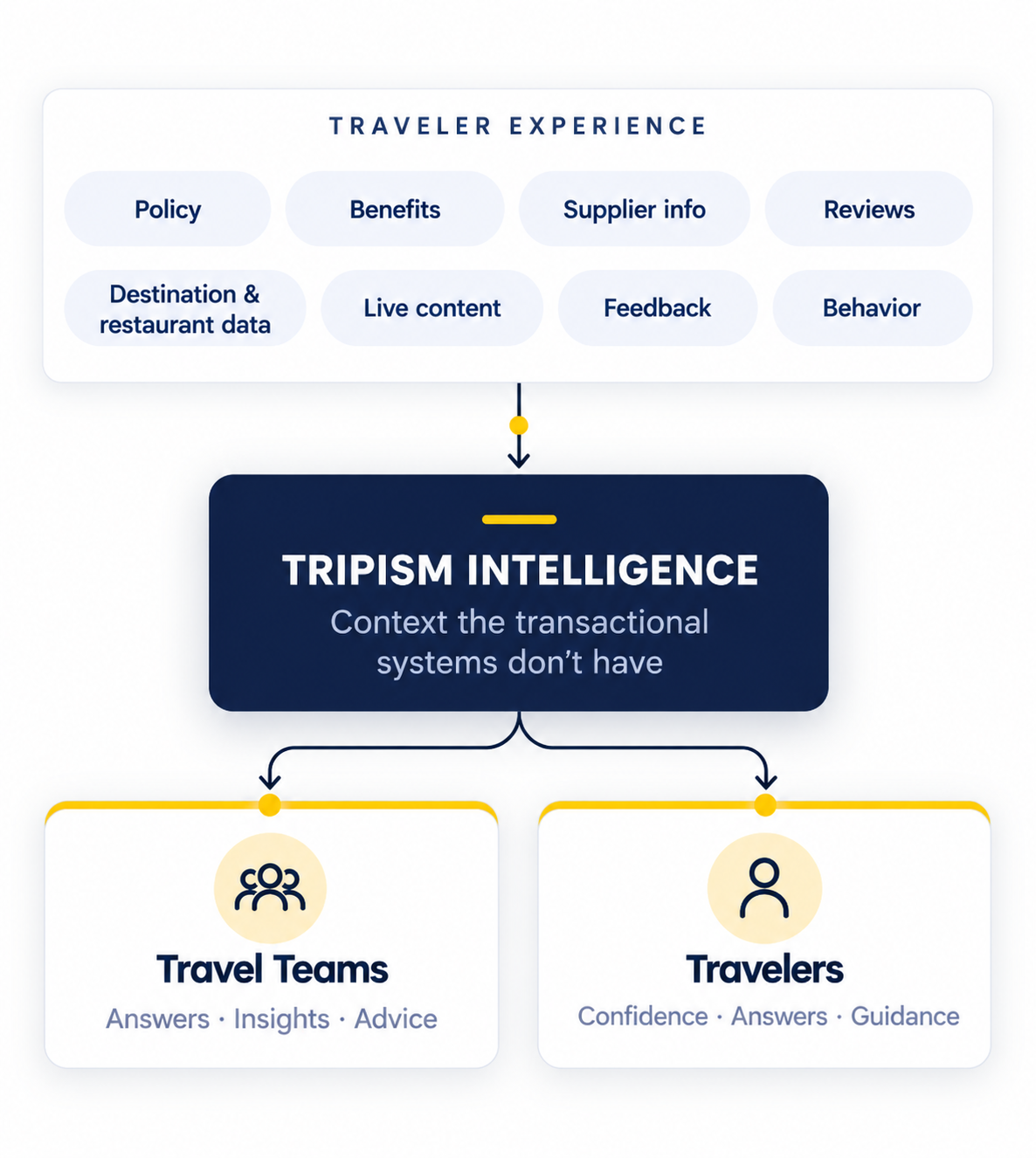
Powering global travel programs for 10 years, Tripism has learned something the booking tools and expense systems miss: the value of a trip isn't in the booking transaction.
It's in whether the traveler stayed somewhere that worked for them, used a benefit they were entitled to, made the meeting calmly and in control, and came back with the relationship stronger than before.
This experience - what actually happens, trip after trip, across hundreds of thousands of travellers - is something no GDS, TMC or review site holds.
So we built it: a decade of structured, corporate-specific traveler intelligence, captured because the people using it found it valuable, with the data depth that lets AI give real, tailored advice rather than generic suggestions.
A good program doesn't force a traveler to choose between doing the right thing and doing the thing that suits them. Tripism turns rules into recommendations and entitlements into benefits the traveler wants to use — so the compliant choice is also the better one. Policy becomes advice, not a barrier.
How an organization takes care of its people on the road says a great deal about how it values them. Done well, business travel is a way a company invests in its employees, and we build the technology that makes that care specific, personal and consistent, for the road warrior and the once-a-year traveler alike.
Tripism doesn't own inventory, process bookings or earn commission. We have no incentive to steer a traveler anywhere except toward the trip that's right for them and right for the program. This philosophy is baked into the architecture we chose, because advice you can trust can't also be advice someone paid for.

Serve employees with travel shaped to them, so each trip works for the person taking it, not just the program.

Manage supplier relationships on evidence rather than estimates, to the benefit of both sides.

Treat travel as the investment it is: measured, understood, and directed toward the outcomes that matter.
Business travel isn't a necessary expense to be minimised.
It's a fundamental way of doing business and a belief about how to do it well.